

Have you ever felt that you have done all of your skincare routine by cleansing, applying moisturizer, and serums, but somehow your skin still looks a little dull? This happens not necessarily because there’s a missing step or product, it may be that your skin needs exfoliation.
Your skin naturally sheds dead skin cells, but those surface cells can contribute to a complexion looking rough, dull, or uneven. The right exfoliation routine can help reveal smoother, fresher-looking skin underneath.
But there’s an important thing to remember: More exfoliation doesn't mean better skin.
You have to understand how to exfoliate and how often to perform it.
What Is Exfoliation?
Exfoliation is the process of removing dead skin cells from the surface of your skin. Some exfoliation methods physically remove surface buildup, while chemical or enzyme exfoliants work differently to help loosen or break down dead surface cells. Professional facial treatments can also incorporate techniques such as dermaplaning, enzyme exfoliation, diamond-tip microdermabrasion, or other methods depending on the person's skin. The right option depends on your skin type, sensitivity, current condition, and skincare goals.
What Are the Benefits of Exfoliating Your Skin?
One of the most noticeable benefits is texture. When dead surface cells and buildup accumulate, skin can appear dull or feel rough. Appropriate exfoliation can help create a smoother-looking surface and reveal a fresher complexion.
People often incorporate exfoliation into their skincare routine to support:
Smoother looking skin
Brighter looking complexion
More refined looking texture
Fresh, healthy looking glow
Removal of dead surface buildup
More even application of skincare and makeup
Healthy exfoliation should be intentional and appropriate for your skin.
How Often Should You Exfoliate?
It depends on several factors, including your skin type, sensitivity, products, exfoliation method, and other treatments you're receiving. Someone using exfoliating acids at home may need a different routine from someone receiving regular professional exfoliation treatments. Sensitive or irritated skin may require a much gentler approach.
Can You Exfoliate Too Much?
Yes.
Over exfoliation can leave skin feeling irritated, sensitive, uncomfortable, or unusually dry. One common mistake is combining several exfoliating products without realizing they perform similar jobs. For example, someone might use an exfoliating cleanser, acid toner, exfoliating serum, scrub, and professional treatment within the same routine. Individually, some of those products may be appropriate, but using it excessively can be too much for that person's skin.
What's the Difference Between At Home and Professional Exfoliation?
At home exfoliation can be an important part of a skincare routine. Professional exfoliation offers something different: your esthetician can evaluate your skin before choosing an appropriate technique and intensity.
At Kiwi Spa, professional facial experiences may incorporate different exfoliation methods depending on the client's skin. For example, dermaplaning gently removes dead surface skin and peach fuzz. Enzyme exfoliation helps break down dead surface cells. Diamond-tip microdermabrasion physically polishes away dull surface buildup to help skin appear smoother and more refined. These treatments aren't interchangeable, and every person doesn't necessarily need all of them.
Does Exfoliation Help Skincare Products Work Better?
Exfoliation can create a smoother surface by removing excess dead skin buildup. This will help skincare products apply more evenly as part of your routine. However, exfoliating more aggressively just to make products “penetrate deeper” isn't a good skincare strategy. Your skincare products should also be appropriate for your skin, particularly after a professional exfoliating treatment when your complexion may be more sensitive.
Is Exfoliation Good for Dry Skin?
Dry skin can still have dead surface buildup, but that doesn't mean it needs aggressive exfoliation. In fact, repeatedly scrubbing dry skin can sometimes leave it feeling even more uncomfortable. For dry skin, an esthetician may choose a gentler exfoliation approach and pair it with hydration focused skincare. This is another example of why skin type alone doesn't tell the entire story.
What Happens During a Professional Exfoliating Facial at Kiwi Spa?
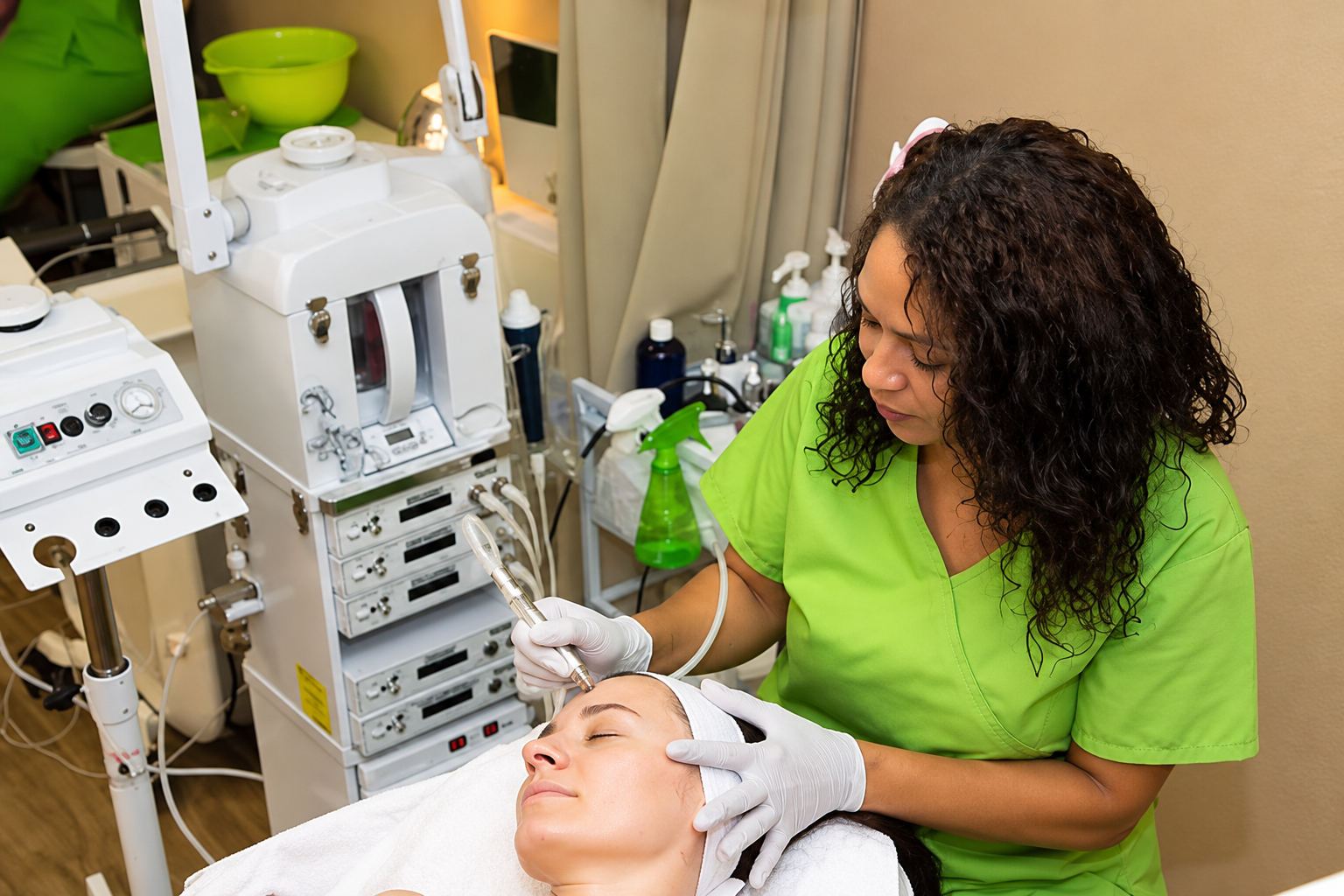
Our esthetician performing diamond-tip microdermabrasion as part of exfoliation treatment at Kiwi Spa, Pacific Beach, San Diego
At Kiwi Spa in Pacific Beach, San Diego, our esthetician first looks at your skin and discusses your concerns, sensitivity, current products, and skincare goals. From there, appropriate facial techniques can be selected based on what your skin needs. Your experience may include professional cleansing, exfoliation, hydration, extractions when appropriate, masks, advanced facial technology, and other personalized steps depending on the facial you choose. The goal is to create a balanced facial experience around your skin.
Should You Exfoliate Before or After a Professional Facial?
Before receiving a professional facial, tell your esthetician about the exfoliating products you're currently using, particularly acids, retinols, scrubs, or other active skincare. Our esthetician can advise you on how those products should fit around your particular treatment. After professional exfoliation, gentle skincare and daily sun protection can be especially important. Avoid assuming that your normal active skincare routine should immediately continue unchanged after every facial.
Looking for Professional Exfoliation in San Diego?
At Kiwi Spa in Pacific Beach, San Diego, our personalized facial experiences can incorporate professional exfoliation based on your skin's individual needs.
Whether that means dermaplaning, enzyme exfoliation, diamond-tip microdermabrasion, or another personalized approach, the goal remains the same:
Kiwi Spa
1919 Grand Ave, Suite 1H
Pacific Beach, San Diego
📞 Call us at 619-621-1177
🌐 Visit: Kiwi Spa Website
